
The era of European witch trials left a dark legacy across the continent, where thousands of individuals fell victim to superstition and religious hysteria. However, in 1711, Ireland witnessed its final recorded formal witchcraft trial, which continues to intrigue historians and folklorists due to its extraordinary documentation. The case of the Islandmagee witches featured an array of eerie phenomena: the death of an elderly clergyman’s widow, an aggressive poltergeist, levitating household items, and claims of demonic possession. Unusually for the period, the accused were not executed, but sentenced to imprisonment and public shaming.
This unsettling sequence of events commenced in September 1710. Ann Haltridge, the elderly widow of a Presbyterian minister residing on Islandmagee, arrived to stay with her son and daughter-in-law. Almost immediately, bizarre disturbances plagued the household. Each night, unseen forces harassed the widow. Within her bedchamber, pieces of turf and stones flew through the air, bed curtains rustled vigorously despite sealed windows, and invisible hands pulled away her nightclothes and snatched the pillow from beneath her head.
The spectral child and the ominous prophecy
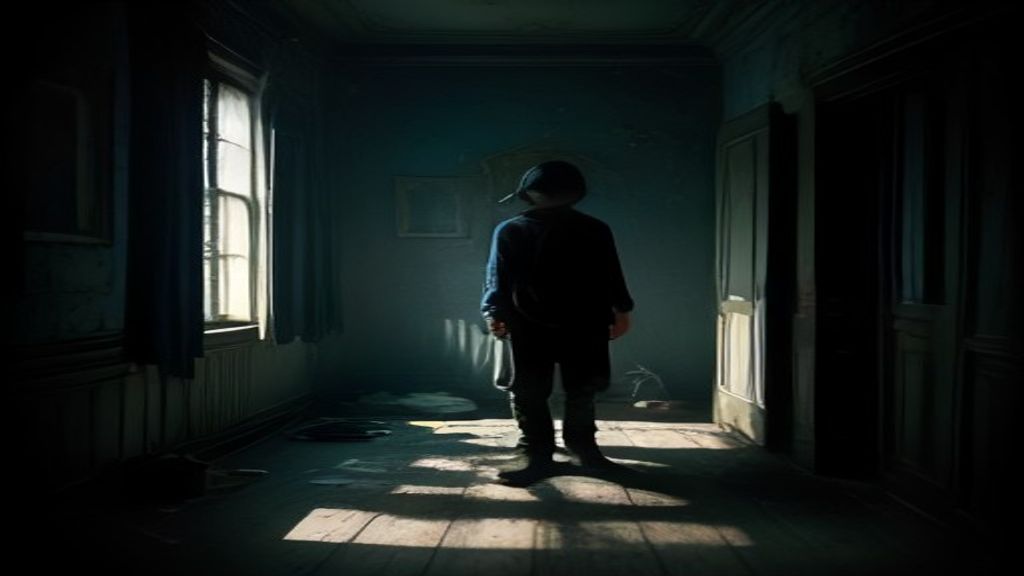
The haunting intensified on December 11. While Mrs. Haltridge sat by the hearth, an apparition materialized beside her. It appeared as a young boy whose face was concealed by a coarse blanket. Overcoming her initial shock, she questioned the uninvited figure about his identity and purpose. The apparition offered no response, abruptly turning and fleeing toward the cow barn. Servants who gave chase watched in astonishment as the figure dematerialized into thin air like dispersing mist.
The phantom returned on February 11 1711. On that morning, Mrs. Haltridge noticed the disappearance of her favored sermon collection. Shortly thereafter, the spectral boy reappeared, thrusting his arm through a closed window to display the stolen volume to a maidservant. He declared that he would never return it, claiming the Devil had instructed him in reading sacred texts. Terrified, the servant uttered traditional protective invocations, to which the spirit responded with sinister laughter.
Suddenly, a rapier appeared in the spirit’s grasp. “You shall all die soon,” he proclaimed, digging into the soil below the window. Asked what he was doing, the apparition stated: “I am digging a grave for a corpse that will shortly lie in this house.” Following this grim declaration, the figure ascended into the air and vanished.
The demise of the widow and the affliction of the maid
The prophecy unfolded rapidly on February 15 as the residence descended into chaos. Garments flew about the room, settling on the bed in the uncanny contour of a shrouded corpse. News of the disturbances spread through the community, yet neither local clergy nor neighbors could halt the activity.
During one night, Mrs. Haltridge suffered excruciating, sharp back pain as though struck by invisible scourges. Overwhelmed by physical and mental distress, the elderly woman passed away on February 22. Yet the disturbances did not cease. On February 27, Mary Dunbar, a capable young domestic servant, arrived to assist the bereaved family. During her first night, she became the target of anomalous activity. Her belongings were scattered, and one morning her apron was found tied in five intricate knots. After Mary inadvertently donned a flannel bonnet belonging to the deceased widow, her condition deteriorated into severe convulsions, delirium, and intense pain.
The final witchcraft trial in Ireland
During lucid intervals, Mary Dunbar claimed she was the victim of malevolent enchantment, identifying specific local women as perpetrators. Authorities arrested eight suspects. However, the accused supposedly cast an additional spell ensuring she could not testify in open court. Indeed, whenever Mary entered the courtroom, her voice vanished entirely, leaving her unable to utter a word.
During the proceedings, the magistrate heard remarkable witness accounts. Dozens of sworn testimonies confirmed sulfurous odors, flying stones, and levitating coverlets. One witness observed a translucent apparition in a nightshirt moving from the bedchamber to the kitchen. Despite this testimony, the presiding judges remained skeptical. They noted that all accused women were reputable parishioners who attended worship regularly, received communion, and recited the Lord’s Prayer without hesitation. The judges cautioned the jury regarding the credibility of spectral evidence.
Nevertheless, the jury delivered a guilty verdict. The sentence was comparatively moderate for the era: one year of imprisonment and four appearances in the public pillory. During their exposure at the pillory, an agitated crowd subjected the condemned women to harsh treatment with projectiles. One of the women lost an eye during the ordeal, marking the conclusion of formal witchcraft prosecutions in Ireland.