During his lifetime, the Italian violin virtuoso and composer Niccolo Paganini packed concert halls across Europe, astonishing audiences with his extraordinary technical mastery. His blistering speed, commanding gaze, and uncanny finger flexibility fueled rumors of a pact with dark forces. However, the greatest drama unfolded after his passing, when the maestro’s mortal remains became entangled in religious prohibitions, superstition, and mystical dread.
Instead of peaceful repose in consecrated ground, the virtuoso’s remains underwent fifty-six years of wandering. His coffin was buried, exhumed, and reburied more than ten times, held on quarantined vessels, and concealed in cellars and rocky islands. This remarkable posthumous odyssey demonstrated why extraordinary genius is so often accompanied by persistent myths that outlive their subjects.
The Bishop of Nice’s anathema and the quarantined ship off Genoa
Niccolo Paganini passed away on May 27, 1840, in a rented residence in Nice after prolonged throat ailments. Having lost his voice and experiencing sudden respiratory failure, the musician was unable to make a final confession to the local priest who attended his bedside. Bishop Domenico Galvano of Nice interpreted this as a deliberate refusal of the sacraments and issued a formal decree declaring the deceased an unrepentant heretic, banning his burial in consecrated Catholic ground.
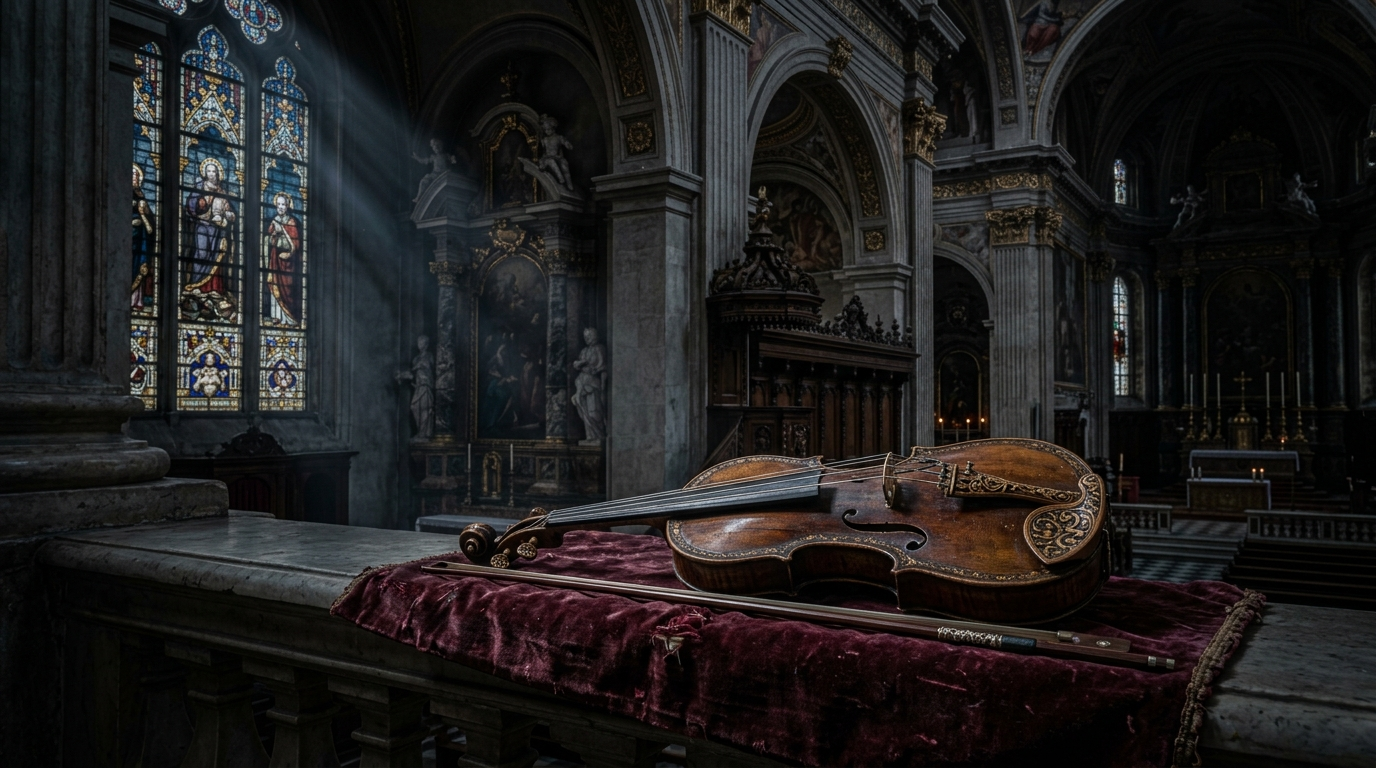
The composer’s body was embalmed and placed within a heavy walnut casket. His only son and heir, sixteen-year-old Achille Paganini, resolved to transport his father’s remains to his birthplace of Genoa. The musician had bequeathed his prized Guarneri del Gesu violin, affectionately called “the cannon,” to the city. However, the governor of Genoa, Filippo Paolucci, fearing church disapproval and rumors of cholera, barred the vessel from docking.
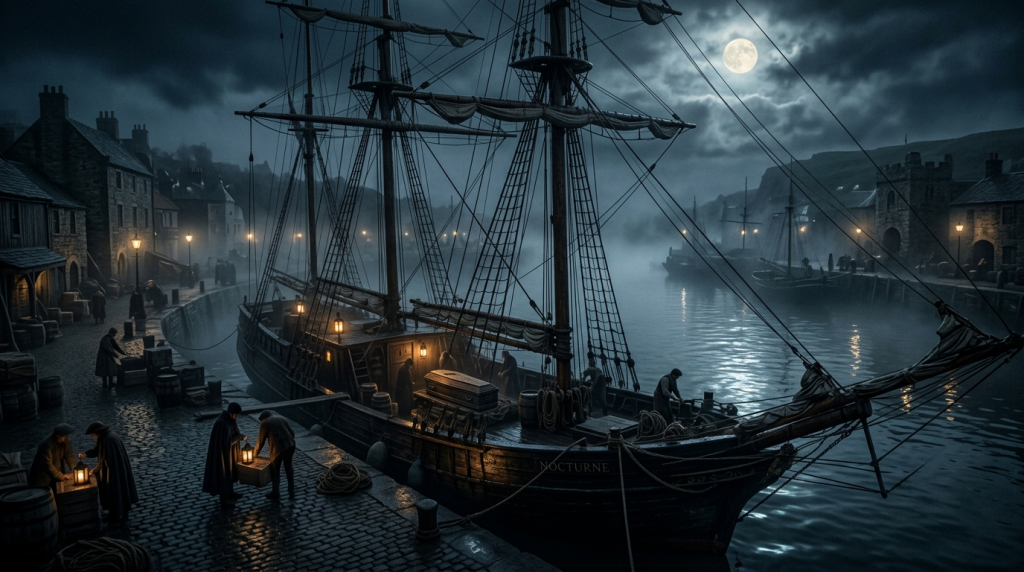
The ship bearing the coffin remained anchored in the harbor for over three months. Crew members on board grew terrified, reporting strange nocturnal sounds and claiming the casket emitted a faint luminescence accompanied by eerie violin melodies.
Hidden retreats in the Chateau de Cessole and Saint-Honorat Island
With the situation unresolved, Count Marcellino di Cessole, a devoted friend of the artist, intervened. Using his social influence, he secured permission to transport the casket to his estate, placing it temporarily in an estate cellar. However, household staff soon refused to enter the lower levels, claiming they saw shadow figures and heard strange laughter.
The remains were moved to a hospital mortuary at Villefranche, yet caretakers there also demanded its removal. Count Cessole then orchestrated a night expedition to Cape Saint-Hospice, where Paganini was hastily buried near a ruined tower. However, local residents discovered the site and threatened desecration.
French author Guy de Maupassant noted in his travel writings that for several years Paganini’s casket rested upon the rocky island of Saint-Honorat in the Lerins archipelago. There, amid crashing waves and calling sea birds, the virtuoso rested while his son navigated the complex bureaucracy of the Roman curia. Paganini had studied ancient instruments of power, but could hardly foresee the legendary aura that would surround his own violin.
Achille Paganini’s campaign for ecclesiastical clearance
Achille Paganini dedicated decades of his life to clearing his father’s reputation. He expended substantial resources on legal counsel and gathered testimonies from physicians and companions confirming that the composer was a faithful Christian whose inability to speak was purely physical. The case advanced through papal tribunals in Rome.
Appeals were examined by Pope Gregory XVI and Pope Pius IX. Finally, in 1876, thirty-six years after the musician’s passing in Nice, the Holy See officially rescinded the burial prohibition. Niccolo Paganini’s remains were conveyed to Parma and interred in the family vault at Villa Gaione.
Yet the aura surrounding the composer persisted, inspiring curious legends and supernatural accounts among contemporaries.
The 1893 exhumation and the final resting place
In May 1893, the tomb was opened once more. Prominent Czech violinist Frantisek Ondricek, a leading interpreter of Paganini’s work, visited Parma. With the consent of the composer’s grandson, officials conducted a formal inspection prior to transferring the remains to Parma’s Monumental Cemetery.
When the walnut casket was opened before physicians and witnesses, those present were astonished. While garments had largely disintegrated, the composer’s facial features and distinctive profile remained remarkably preserved. This finding prompted renewed public interest and commentary.
In 1896, Niccolo Paganini was finally laid to rest in Parma’s central cemetery beneath an imposing granite monument. The maestro’s half-century posthumous journey stands as a testament to how exceptional genius can be misunderstood by its era, and how public fascination with extraordinary talent can outlast generations.